Hidden Wounds: How Vicarious Trauma Shapes the Lives of Yemen’s Human Rights Defenders
SERIES: Centering Mental Health in the Fight for Justice (CASE STUDY: Yemen)
In our first two posts in this series, we examined how Western wellness frameworks often fail to address the root causes of trauma, and how communities in active conflict are practicing collective care as a form of resistance. This case study turns to Yemen. Here, the people responsible for documenting atrocities are themselves being systematically traumatized, targeted, and silenced. What happens to transitional justice when its witnesses can no longer bear witness? Who protects the protectors?
In Yemen, where war has reshaped daily life for more than a decade, human rights defenders carry a unique kind of burden, one that rarely makes headlines. While the world hears about airstrikes, blockades, and political fractures, far less is said about the invisible emotional toll on those documenting these abuses. These are the people who sit with families as they recount disappearances, torture, sexual violence, or the loss of children to preventable disease. They listen, they record, they try to make the world pay attention, but in the process, they often absorb the pain of every story they capture.
This emotional absorption has a name: vicarious trauma, the psychological impact of witnessing others’ suffering. For Yemeni activists, journalists, and lawyers, it often shows up as sleepless nights, intrusive memories, overwhelming fear, or a heavy numbness that creeps in after too many tragedies. Guilt is also common: guilt for surviving, guilt for not being able to do more, guilt for needing rest when others cannot afford it. Many experience moments of moral distress, knowing that even the most careful documentation may not lead to justice in the near future. These aren’t just emotional reactions but hidden injuries that accumulate with every interview and every report.
But in Yemen, defenders don’t just witness trauma—they’re also targeted.
Targeted for Telling the Truth
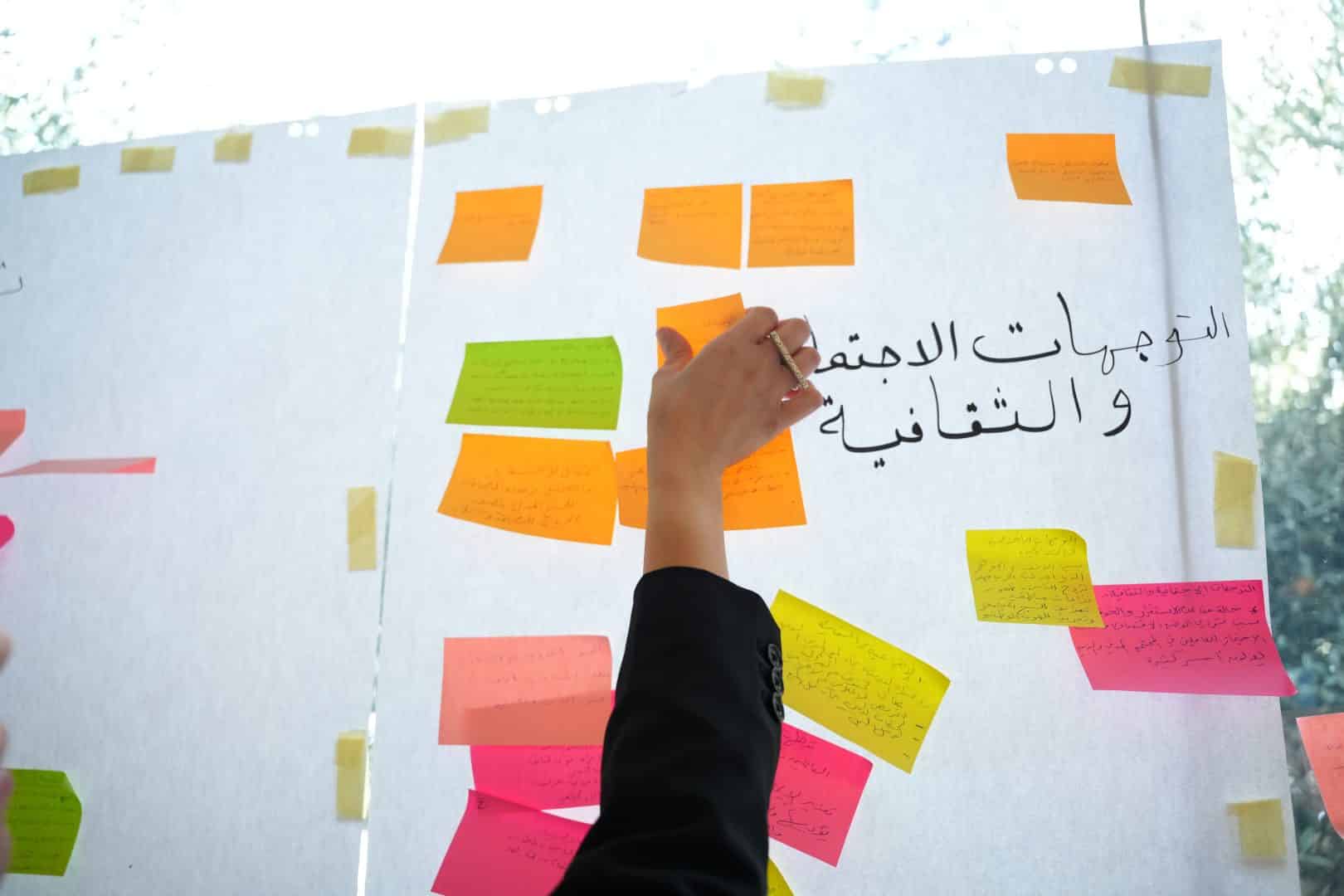
What human rights defenders say about these conditions is illuminating. At the PartnersGlobal “Voices for Justice” forum in December 2025, Yemeni human rights activists spoke directly about the layered nature of trauma: not just as witness to others’ pain, but the direct and targeted persecution they experience. . In Houthi-controlled regions, they risk arbitrary arrest, enforced disappearance, surveillance, intimidation, and prolonged detention without trial. In the south, under the Southern Transitional Council and other armed groups, they may experience harassment, threats, or restriction of movement. Across the country, journalists and advocates face smear campaigns, travel restrictions, defamation, digital surveillance, and pressure on their families. Many have been tortured. Some have been killed. Others are forced into exile, cutting them off from their communities and the work that once gave them purpose. In this environment, speaking up can cost everything. The line between professional trauma exposure and personal trauma disappears entirely.
There is a constant pressure that is both emotional and physical, and with extremely limited access to mental health care, the stigma associated with seeking help or the lack of safe support networks, many activists simply push forward because they feel they have no other choice.
What is at Stake: Trauma, Silence, and Transitional Justice
These combined pressures have deep implications not just for the individuals affected, but for Yemen’s long-term pursuit of transitional justice. Transitional justice, the ability for society to respond to and seek accountability and redress for massive human rights violations, requires documentation, testimony, archives, and centers on the voices of survivors. Yet the very people who collect this information are being silenced, traumatized, imprisoned, or driven to exile.
When defenders are too threatened to operate, evidence goes unrecorded. When trauma overwhelms activists, their ability to analyze, advocate, and organize is weakened. When organizations are shut down or pushed into hiding, communities lose trusted spaces to tell their stories, and without documentation, there can be no meaningful accountability, no reckoning with war crimes, no truth-telling processes, no reparations programs rooted in lived
experience.
Despite the danger, Yemeni human rights defenders continue. Their resilience is extraordinary; driven by the belief that someone must bear witness, that every story preserved is a barrier against forgetting. But for transitional justice to ever take root, protecting these defenders – their physical, digital, and psychosocial security – is not optional. It is the foundation on which future truth commissions, reparations processes, and rule-of-law reforms will depend.
Holistic Security as a Justice Imperative
This is precisely the context liberation psychology was built to address. When trauma is systemic, when it is produced by state actors and sustained by impunity, individual resilience frameworks can feel insufficient. What Yemeni defenders need is not better coping strategies, but protection systems, peer solidarity networks, and international accompaniment that treats their psychological security as inseparable from their physical security. Holistic security – the integration of digital, physical, and psychosocial protection – is not a luxury for defenders working in these conditions. It is the minimum threshold for their work to continue at all.
Documentation is an act of memory, and memory is an act of resistance. “Who protects the protectors” is not a peripheral question in Yemen’s transitional justice project, it is the central one.
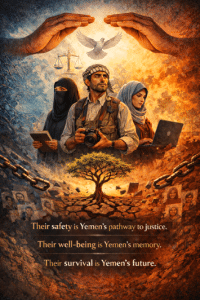
Their safety is Yemen’s pathway to justice.
Their well-being is Yemen’s memory.
Their survival is Yemen’s future.
Support our work in Yemen by donating here.