Building Bridges of Safety: A New Wave of Community Protection in Basra
For years, violence against women (VAW) and girls has remained a hidden concern in Basra, Iraq. Many survivors of such violence hesitate to report incidents due to a fear of ostracization and a general lack of trust in their communities’ security institutions. This normalized phenomenon too often leaves individuals vulnerable, and communities unequipped to carry out restorative justice.
To address such challenges, PartnersGlobal (Partners), in collaboration with Al Firdaws, launched the Creating Safe Spaces for Survivors in Basra (Safe Spaces) initiative (2023–2025). The program aims to empower survivors of social violence, improve reporting mechanisms, and build trust between security institutions and local community members.
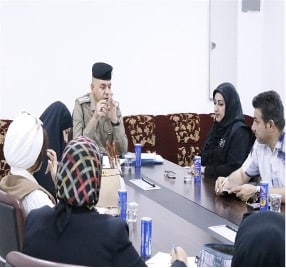 To empower survivors of VAW, Partners and Al Firdaws utilize their expertise in communication and local community outreach to reshape problematic narratives surrounding incidents in Basra. Throughout the project’s implementation, the team has successfully launched initiatives such as outreach campaigns on Instagram and Facebook, open community dialogues, and deliberate engagement activities with local officials. These activities aim to both address the cycle of silence found in Basra related to VAW and encourage a culture where protection and accountability are seen by the populace as shared responsibilities.
One community member reflected after a dialogue session:
“For the first time, I feel that the police and the community are on the same side. We are working together to solve problems, not just waiting for someone to act.”
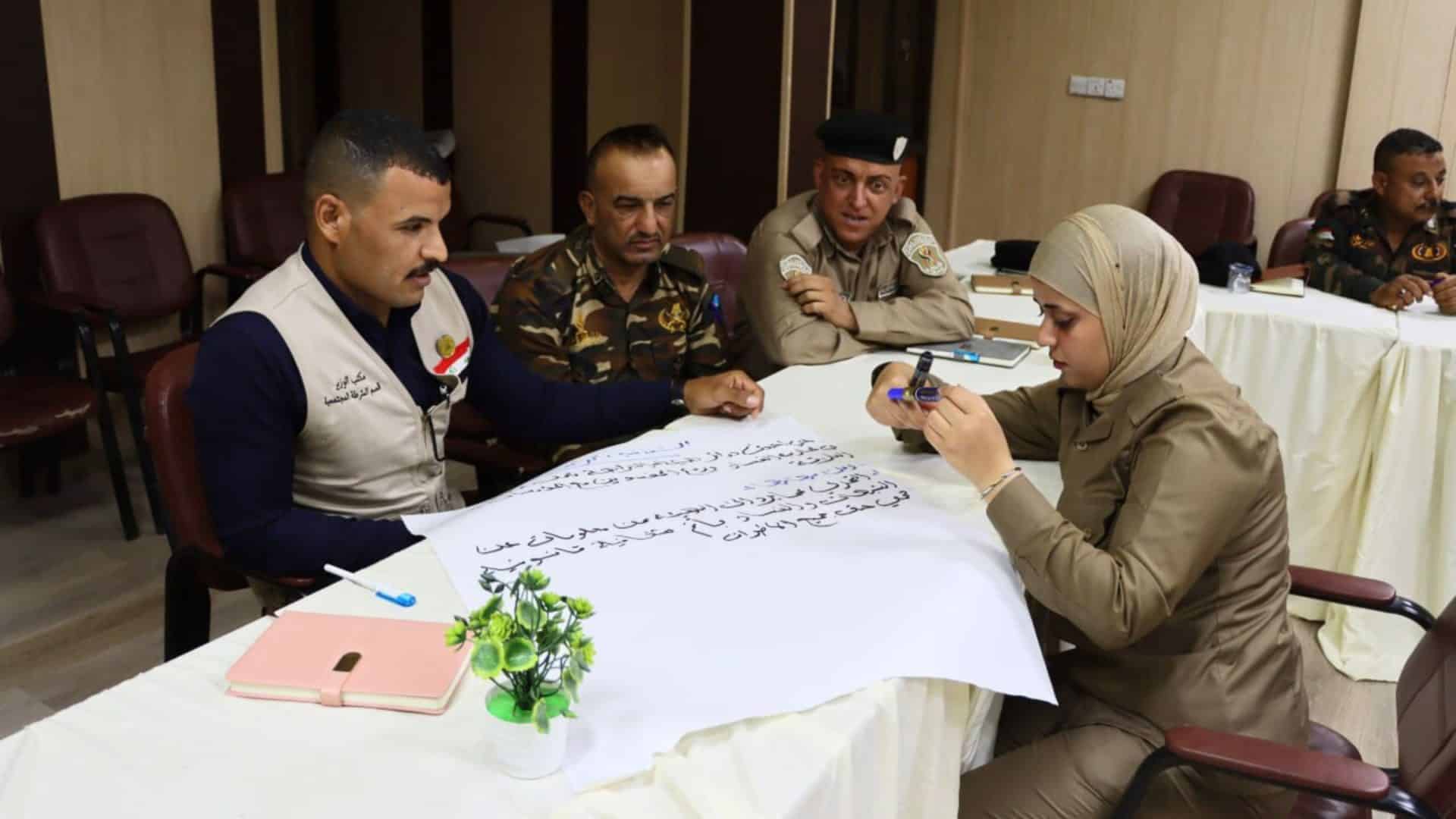
This increased collaboration between the police and local community members has been one of the program’s most powerful outcomes. To further calcify this behavior, Safe Spaces has organized a series of survivor centered trainings—attended by local police officers, community leaders, and media representatives—focused on human rights, safety and security, effective reporting mechanisms, and survivor support. Additionally, Safe Spaces’ locally led community events further provided a platform for dialogue, awareness-raising on the challenges facing survivors of VAW and mitigation strategies.
A young participant involved in Safe Spaces’ community dialogue session, Amina, shared her personal experience:
“I used to think nothing would change and that no one would listen to me. After the training sessions and community meetings, I saw police officers not only listening but taking action. I felt seen and encouraged to report my case.”
In addition to survivors, police officers, and other security officials have themselves reported an increased understanding of the needs of survivors and a willingness to adjust their practices to meet those needs. Officer Abd Alkareem, a training participant, attested:
“The sessions helped us understand the importance of treating survivors with respect and compassion. We now feel more prepared and motivated to serve the community in a better way.”
This shift in perspective reflects the overarching goal of the program: To build systems of safety within Basra that not only address the needs of survivors with increased scrutiny but with respect and dignity that will spur action from both institutions and local community members.
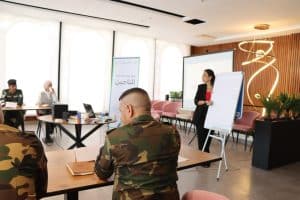 Looking forward, the program aims to build resilient and durable mechanisms of support for survivors of social violence in Basra. As the program continues, the team expects to achieve this venture through the expansion of its survivor-centered security trainings, the continued engagement with local leaders on VAW policy, and targeted awareness campaigns across Basra.
Based on the reflections of survivors, officers, and community members, the Safe Spaces team is hopeful that these efforts will continue to build trust, protect vulnerable individuals, and foster a stronger sense of safety in Basra.